
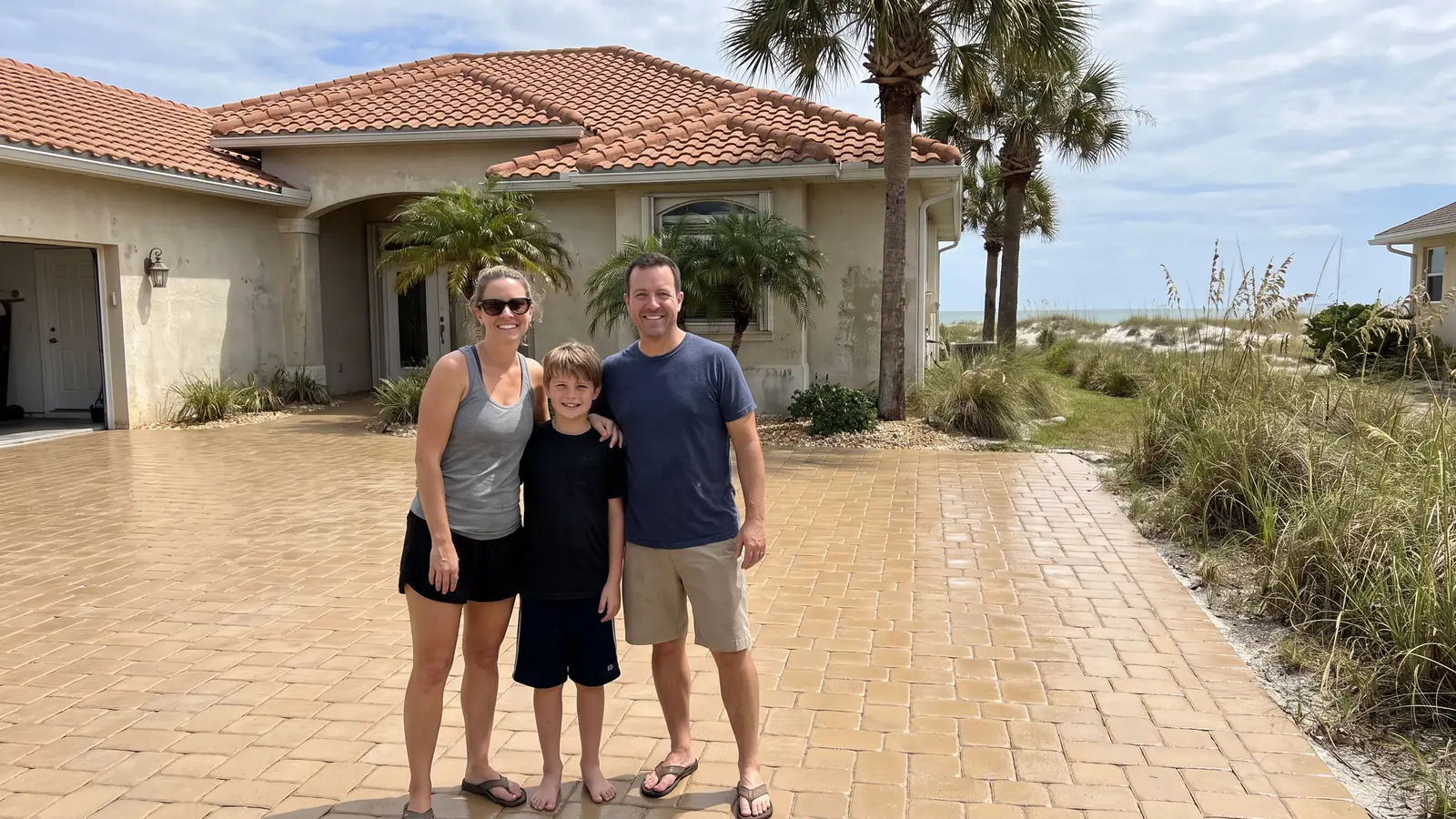
Paver sealing for Palm Coast homes
Paver Sealing in Palm Coast, FL
Palm Coast homes on the saltwater canals deal with salt air and damp, so call (904) 274-8546 for a free estimate.
- Brings out deeper paver color
- Fresh joint sand helps lock pavers in place
- Gives weeds less room to grow
- Makes the surface easier to keep clean
- Free estimate, no obligation
Request a Free Estimate
Free, no obligation.
Fast, careful paver sealing in Palm Coast
From the R section to the canal streets of Palm Harbor, Palm Coast homeowners can get paver sealing with a free estimate. Drives, walks and pool decks get washed, re-sanded and given a fresh coat by a local contractor. Weeds in the joints, mildew on a screened pool deck and low spots can all be looked at. Reach out when you ask for a free estimate, and you will get a reply within 1 business day, usually much sooner.
Maybe the drive has a gray film on the canal side, and the pool deck under the screen looks dull and spotted. Clean it, sand it and seal it, and the pavers show their real color again. Weeds stop poking through the cracks, and the joints stay full and tight. If a phone call is easier, dial (904) 274-8546 and describe the job.
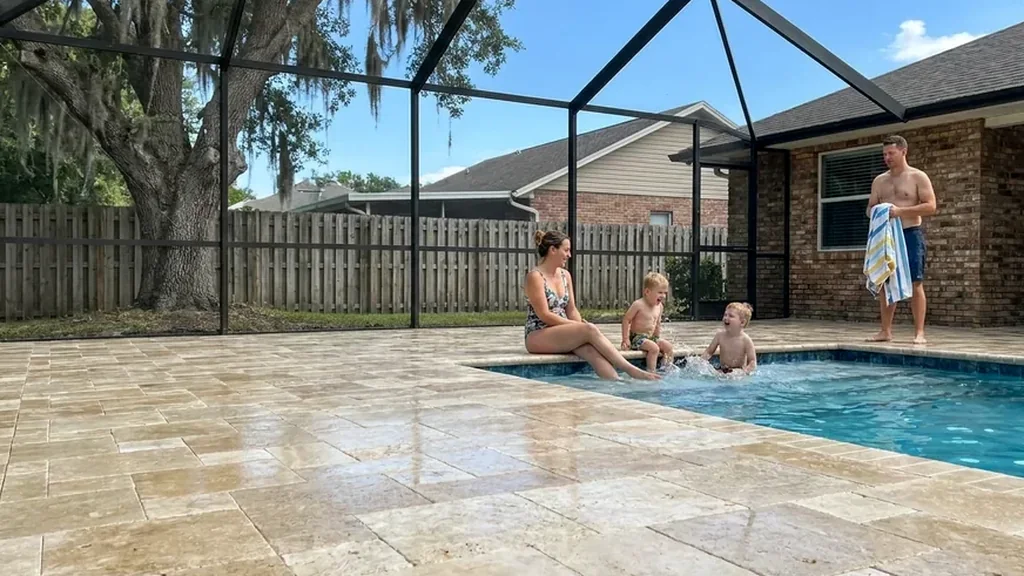
Why hire a local paver sealing contractor in Palm Coast?
Palm Coast is split by I-95, with canal streets east and wooded sections west, so homeowners tend to want a contractor who knows the layout. To ask about your section, ask for a free estimate.
A measured, free estimate
A contractor measures your Palm Coast pavers at no charge and walks the lot with you. You get a price before saying yes.
A published price range
Paver companies in Northeast Florida commonly publish $1.50 to $3.25 per square foot to clean, sand and seal, a fair check on any bid.
Matte or a wet look
A wet look darkens the color and shines, but it shows scuffs sooner. Matte keeps the pavers close to their natural tone.
Your schedule, your choice
You pick the day and can say no after the estimate. During storm season a date may shift, and that is normal here.
Get Your Free Estimate in Palm Coast
Tell us about your pavers in Palm Coast.
Free, no obligation
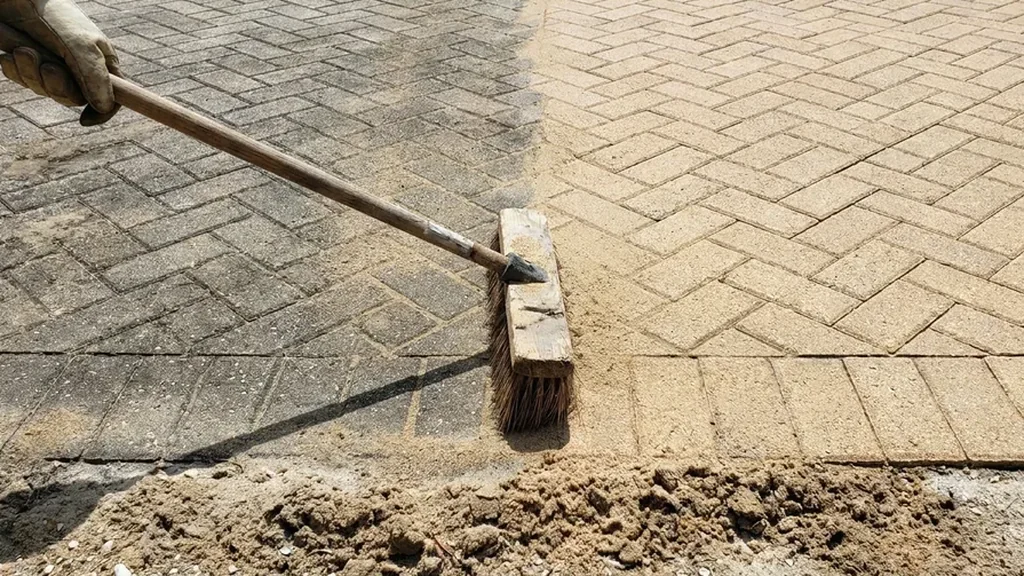
What paver problems show up most in Palm Coast?
Salt air along the saltwater canals
Palm Coast has 23 miles of saltwater canals, and the C and F sections of Palm Harbor hold the homes that back up to them. A Palm Coast paver company says salt air, wind and sun wear down hardscape, and canal moisture feeds mildew and algae. That means a canal-side patio can look worn sooner than a drive across the street. Salt film and growth both need to come off before a new coat.
Rain that sits on slow-draining sand
The Bimini soil series was first described in Flagler County, near State Road 100. The USDA describes deep sand that is somewhat poorly drained and slowly permeable, with about 55 inches of yearly rain nearby. Water that lingers works sand out of the joints and keeps low spots damp. A careful contractor checks where puddles form before planning the sand and sealer.
Storm years that empty the joints
Flagler County took major damage from storms in 1999, 2004, 2008, 2016, 2017 and twice in 2022. On average, the area feels a tropical storm or hurricane about every 2.73 years. Heavy wind and rain push debris into joints and carry sand away. After a big storm, Palm Coast pavers often need a fresh wash and new sand before sealing, and leaves left for weeks can stain them.
Wet edges from reclaimed water
Some Palm Coast neighborhoods, including Hidden Lakes, Toscana and Grand Landings, are on the city's reclaimed water lines. Sprinklers that hit the pavers keep the edges damp, and sealer needs a dry surface. The watering plan has to fit around the job, both before and after the coat goes on. Orange or dark marks along the spray line should be cleaned before sealing, and turning spray heads away helps the coat last.
Unknown coats in the older sections
The first Palm Coast homes went up in 1972, and sections like Pine Lakes are among the older ones. A house that has changed hands may have pavers sealed by a past owner with an unknown product. Water-based sealer cannot go over solvent-based sealer, so that old coat matters. Peeling or cloudy patches are a sign the old layer may need stripping first.
Does your Palm Coast section change how pavers should be sealed?
It can, because Palm Coast sections range from saltwater canal streets to wooded lots far from the water. ITT gave each section a letter, and every street inside it starts with that letter. The C and F sections of Palm Harbor are where homes back up to saltwater canals with Intracoastal access. Call (904) 274-8546 and give your section letter so the contractor knows what to expect.
The R section is Lehigh Woods, on the south side with quick I-95 access. Seminole Woods holds the S and U sections to the south, Matanzas Woods the L section north, and Indian Trails the B section west. These inland sections sit away from the salt canals, so shade and joint sand loss are often the bigger concerns. To ask about a drive in one of them, ask for a free estimate.
Pine Lakes, the W section, is one of the older neighborhoods, and Pine Grove and Belle Terre share the central P section. Hidden Lakes, Toscana and Grand Landings use reclaimed water for irrigation, which affects how the sprinklers are handled on sealing day. Each part of the city brings its own mix of age, water and shade. When you ask for a free estimate, name your neighborhood and say if you have a pool deck.
What does paver sealing cost in Palm Coast?
Paver companies around Northeast Florida commonly publish $1.50 to $3.25 per square foot to clean, sand and seal. In Palm Coast, canal-side growth, storm debris and old sealer are what push a job up or down in that range. A pool deck and lanai add square feet to the drive, so the total climbs with the layout. To get a number for your pavers, ask for a free estimate.
Other details on a Palm Coast lot count too. Peeling sealer may need stripping, and sunken pavers need an installer before any coat goes on, which is priced on its own. Work inside a screen enclosure goes slower than an open drive. Call (904) 274-8546 and ask which of these apply before anyone starts.
| Paved area | Typical example | Clean, sand and seal |
|---|---|---|
| 300 sq ft | Small patio or walkway | $450 to $975 |
| 600 sq ft | Two car driveway | $900 to $1,950 |
| 1,000 sq ft | Large driveway or pool deck | $1,500 to $3,250 |
| 1,500 sq ft | Driveway plus pool deck | $2,250 to $4,875 |
Math based on the $1.50 to $3.25 per square foot that Northeast Florida paver companies published as of November 2026. Your contractor sets the actual price after seeing the surface. Repairs, leveling and stripping failed sealer are usually extra.
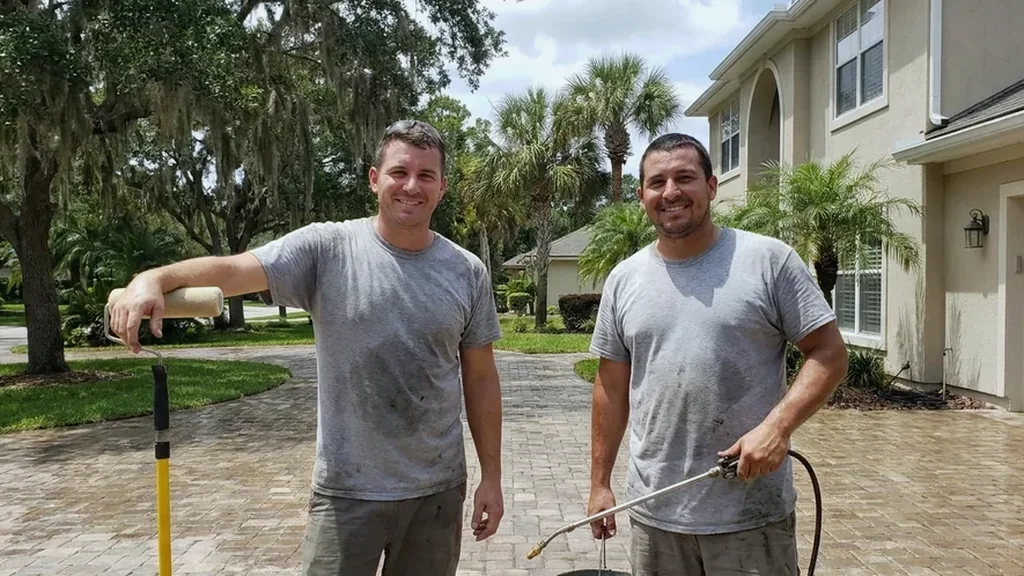
How does a paver sealing job work in Palm Coast?
Check the water around your lot
The visit starts with where water comes from and where it goes. On a Palm Coast lot that may mean a canal out back, a swale out front or sprinklers on reclaimed water. The contractor notes low spots, sunken pavers and any old coat. Each of those changes the plan for cleaning, sand and sealer.
Wash off salt, algae and storm grit
Cleaning comes next, with attention to salt film on canal patios and mildew inside screened lanais. Storm debris gets cleared from the joints at this stage too. Rust and oil spots get their own treatment, since a general wash will not lift them. Rinse water is kept out of the canal and off stucco, and inside a screen the pressure stays low so the mesh is not torn.
Refill the joints with proper sand
The wash leaves the joints low, and new joint sand is brushed in and compacted. A local company says many area installs used play sand, which storms and sprinklers wash out. Joint sand made for pavers holds better through heavy rain and sprinkler runs. Full joints keep pavers from shifting and give weeds far less room to sprout between storms.
Hold the sprinklers and wait for dry
Sealer needs a dry surface, so the sprinklers have to stay off on sealing day. On slow-draining Flagler County sand, low spots may hold water after rain. The contractor checks those spots and the shaded edges before the coat goes on. If a storm moves in, or morning dew lingers under the lanai roof, the job waits.
Seal and give it time
The sealer goes on in the finish you chose, across the pavers and into the joints. Ask when you can walk on it, drive on it and restart irrigation. The usual company quote is two to five years until the next coat, and canal-side patios may come due sooner. Hang on to the product name, since the next coat has to work with it.
Complete paver services in Palm Coast
A Palm Coast paver job happens in four parts: wash, sand, dry and seal. Salt film, algae and dirt come off first, and then the gaps get topped up with new sand. Sealer goes on last, so no dirt or salt gets trapped under it. To ask how long each part would take at your home, call (904) 274-8546.
Drives, front walks, lanais and pool decks all wear differently here. Canal-side patios take salt air and moisture, while screened lanais and pool enclosures trap humidity and grow mildew. Drives in the inland sections take tires, sun and the odd oil drip. Tell the contractor about every area when you ask for a free estimate.
Choosing a sealer starts with what is already there, since water-based sealer cannot go over solvent-based sealer. Then comes the finish, matte or a wet look that shows scuffs sooner. On a canal lot, ask how the product holds up to salt air and damp. Call (904) 274-8546 to talk through the options before the visit.
Palm Coast has a humid subtropical climate, and summer storms can stall a sealing date. Hurricane season can also bring a storm that undoes fresh joint sand. Planning around calmer weather can save a second trip and a second wash. For a date that suits the forecast and your sprinkler days, ask for a free estimate.
Questions to ask before you hire
- How many days should I wait before I park the car on it?
- What would you do if the sealer dried with a white haze on it?
- When can my irrigation start back up after the sealer goes down?
- Can you show me your liability insurance and tell me whether this work needs a license here?
- How do you keep overspray off my garden beds, pool water and stucco?
- With the salt air out here, how many years do you expect a coat to hold?
- What do you ask for up front, and is the rest due the day you finish?
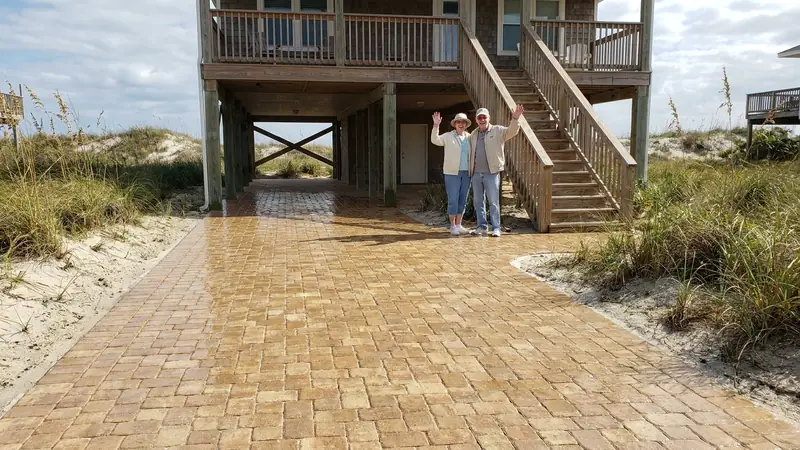
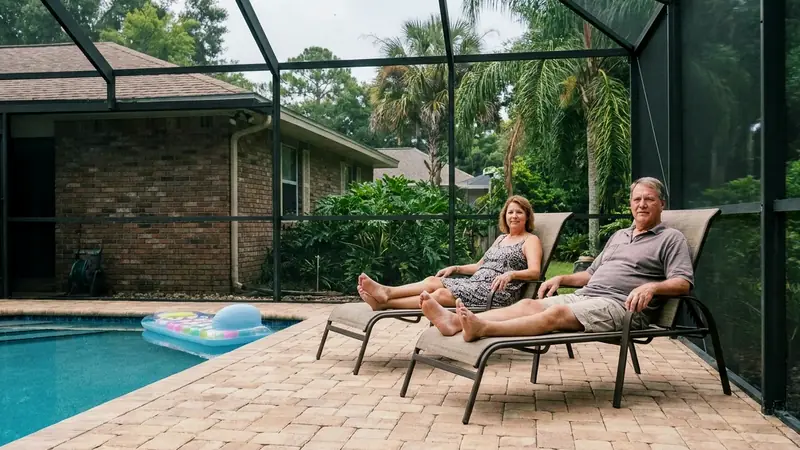
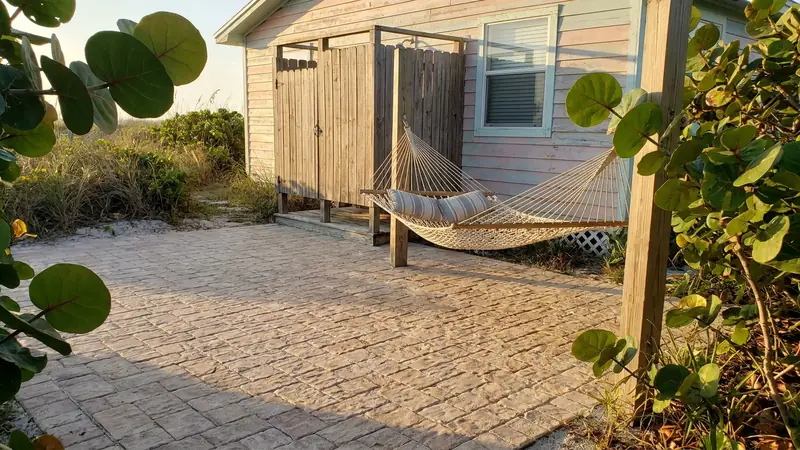
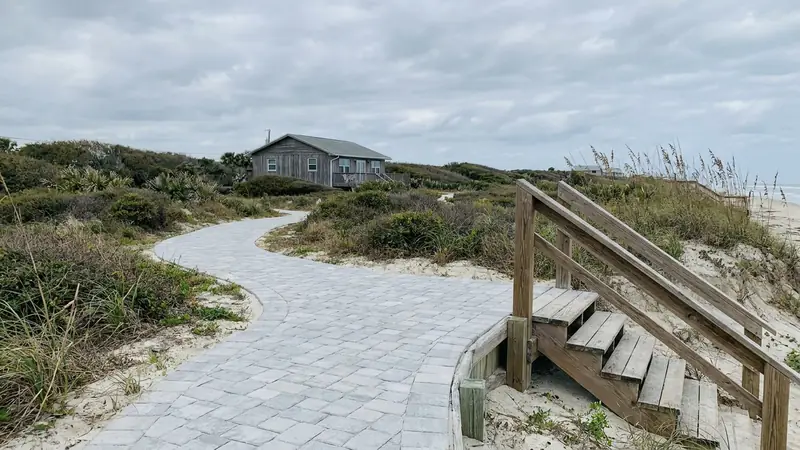
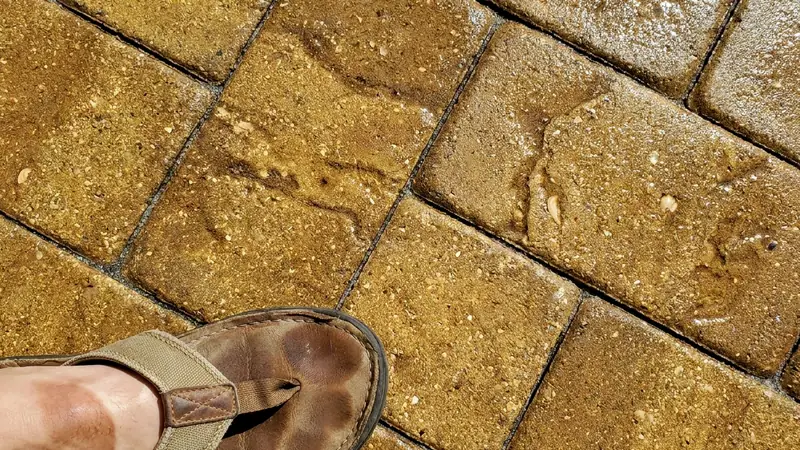
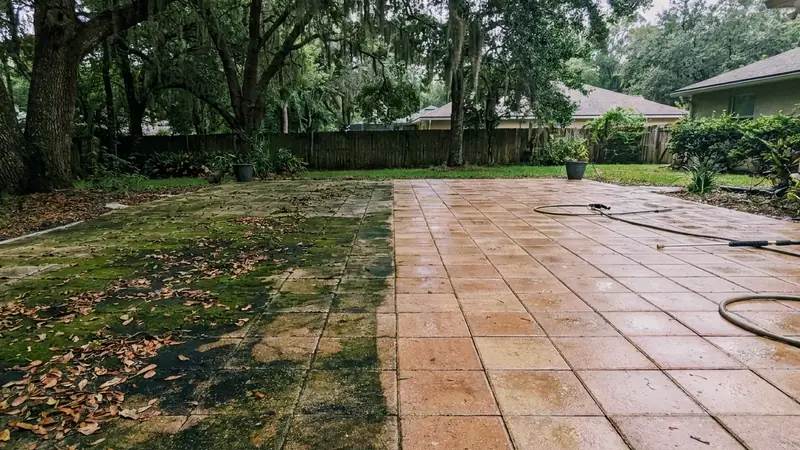
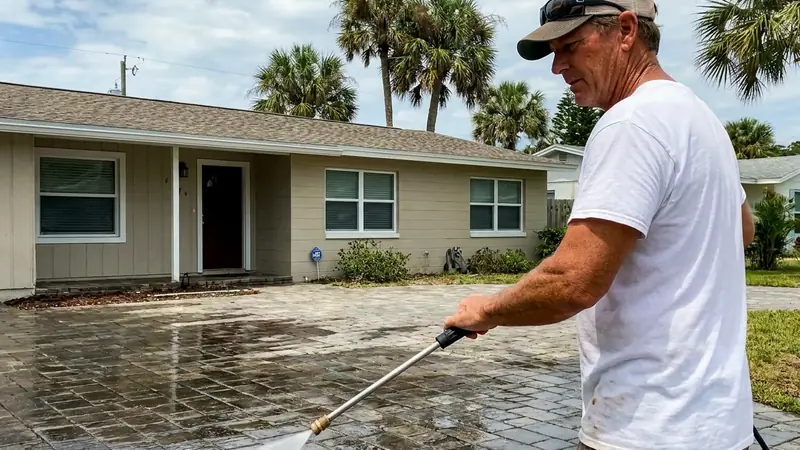
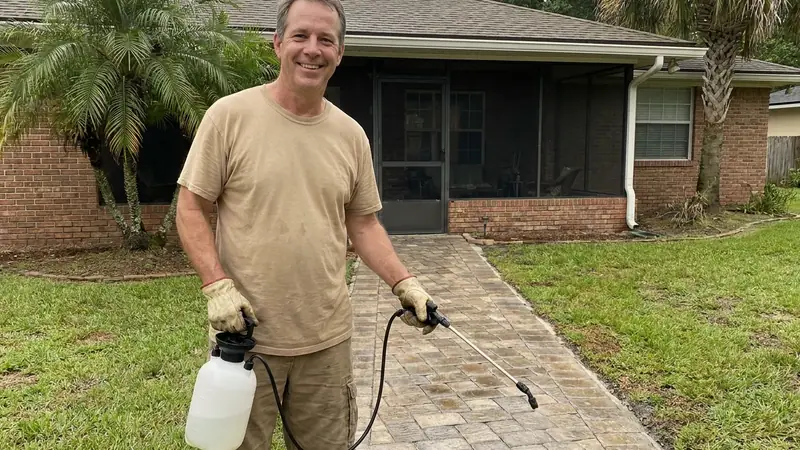
What do sealed pavers look like around Palm Coast?
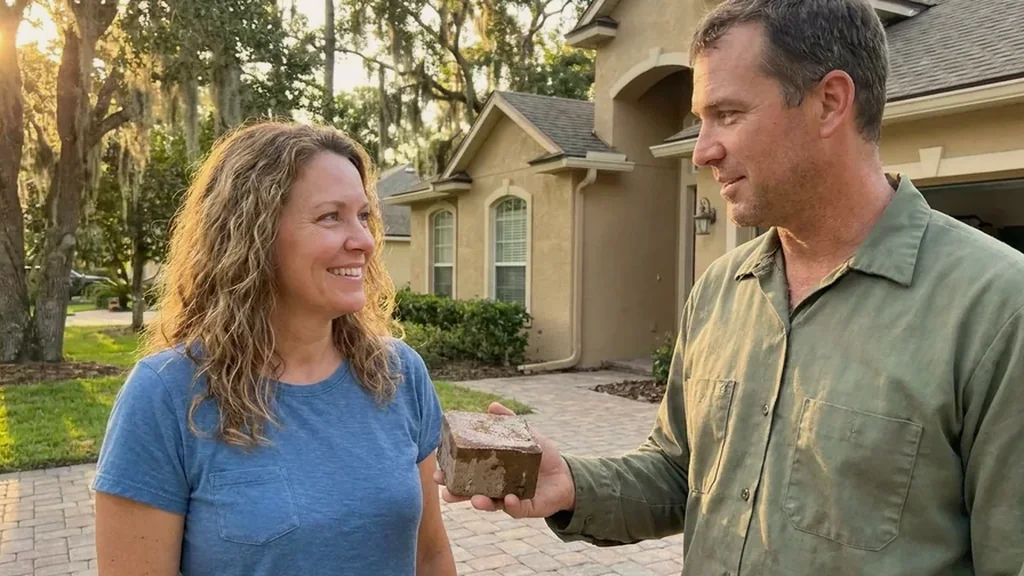
Why local matters in Palm Coast
A contractor who works Palm Coast knows the difference between a Palm Harbor canal lot and a wooded street in Matanzas Woods. Salt, shade and water all change from one section to the next. An out-of-town crew might handle them all alike and miss what each one needs. To reach a contractor who knows Flagler County streets, call (904) 274-8546.
Weather is the next piece of local knowledge. Flagler County feels a tropical storm or hurricane about every 2.73 years, and summer brings heavy afternoon rain. A contractor who lives with that weather plans dates around it and knows to check sand loss after a storm. When you ask for a free estimate, ask what happens if a storm lands on your date.
Palm Coast is also large, with sections spread on both sides of I-95. A contractor who already works the city knows the way to Lehigh Woods, Seminole Woods or the European Village area without guessing. That makes arrival windows easier to keep on a busy day. If you live off one of the three interchanges, ask for a free estimate and mention which one.
How did Palm Coast's layout shape the pavers you have today?
It set up the canals, the lettered sections and the swales your drive sits beside. ITT began the plan in 1969 with 48,000 home sites on land that was mostly swamp and pine forest. Its water system added 46 miles of freshwater canals and 23 miles of saltwater canals, and the first homes went up in 1972. If your pavers sit near one of those canals, call (904) 274-8546.
The city kept growing for decades on both sides of I-95. The Hammock Dunes Bridge opened over the Intracoastal in 1988, and the European Village opened in Palm Harbor in 2006. Today more than 130 miles of trails link parks across Palm Coast. Near any of these landmarks, ask for a free estimate and name your street.
Frequently Asked Questions
What is the R section of Palm Coast, FL?
The R section is Lehigh Woods, on the south side of Palm Coast with easy access to I-95. Every street in it begins with the letter R, a system ITT used across the city. It sits inland, away from the saltwater canals of Palm Harbor on the east side. For pavers there, shade, sand loss and sprinkler marks are common reasons to reseal.
What is Palm Coast, Florida known for?
Palm Coast is known as a planned city that ITT began in 1969, with lettered sections and miles of canals. It has 46 miles of freshwater canals, 23 miles of saltwater canals and more than 130 miles of trails. It had 89,258 people in 2020, nearly triple its count in 2000. That size means paver conditions vary a lot from one section to the next.
How do I find my Palm Coast section letter?
Look at the first letter of your street name. Palm Coast streets follow a simple pattern that ITT set up in the 1970s. ITT gave every street in a section the same first letter, so a street starting with R puts you in Lehigh Woods. Sharing that letter tells the contractor a lot about your part of town before the visit.
Why is paver sealing in Palm Coast so expensive?
Most of the cost comes from the work done before the sealer goes on. The pavers get washed, salt and algae removed, joints refilled and the surface dried. Published prices across Northeast Florida for that full job run $1.50 to $3.25 per square foot. Stripping an old coat or working inside a screen enclosure can add to it.
How long does sealer last on Palm Coast pavers in Florida?
The general quote from companies is two to five years between coats. A Palm Coast company says many local pavers do well with resealing every 3 to 5 years, depending on sun, shade, moisture and traffic. Canal-side patios and pool decks in full sun tend toward the shorter end. Pavers that darken when wet, instead of shedding water, have lost their coat.
Do canal-front Palm Coast homes need sealing more often?
Often, yes, especially on the saltwater side of town. A Palm Coast company says canal moisture feeds mildew and algae, and salt air wears down hardscape. A patio facing a saltwater canal may need a check sooner than a drive on an inland street. A yearly look at the patio and pool deck is a good habit on canal lots.
How soon after a hurricane can Palm Coast pavers be sealed?
They can be sealed once they are cleaned, re-sanded and fully dry. A storm can push debris into the joints and carry sand away, so the wash and sand come first. Low spots on slow-draining ground may stay wet for days after the rain stops. Ask the contractor to check the lowest part of the drive before setting a date.
Should I turn off reclaimed water before my pavers are sealed?
Yes, the sprinklers should stay off for a while before and after sealing. Sealer needs a dry surface, and spray on fresh sealer can leave marks. Ask the contractor how long to wait before watering again, and turn spray heads away from the pavers to help the coat last. If a neighbor's sprinklers reach your drive, a friendly heads-up helps too.
Ready for a Free Estimate in Palm Coast?
Call (904) 274-8546 and tell us about your pavers.
Free, no obligation